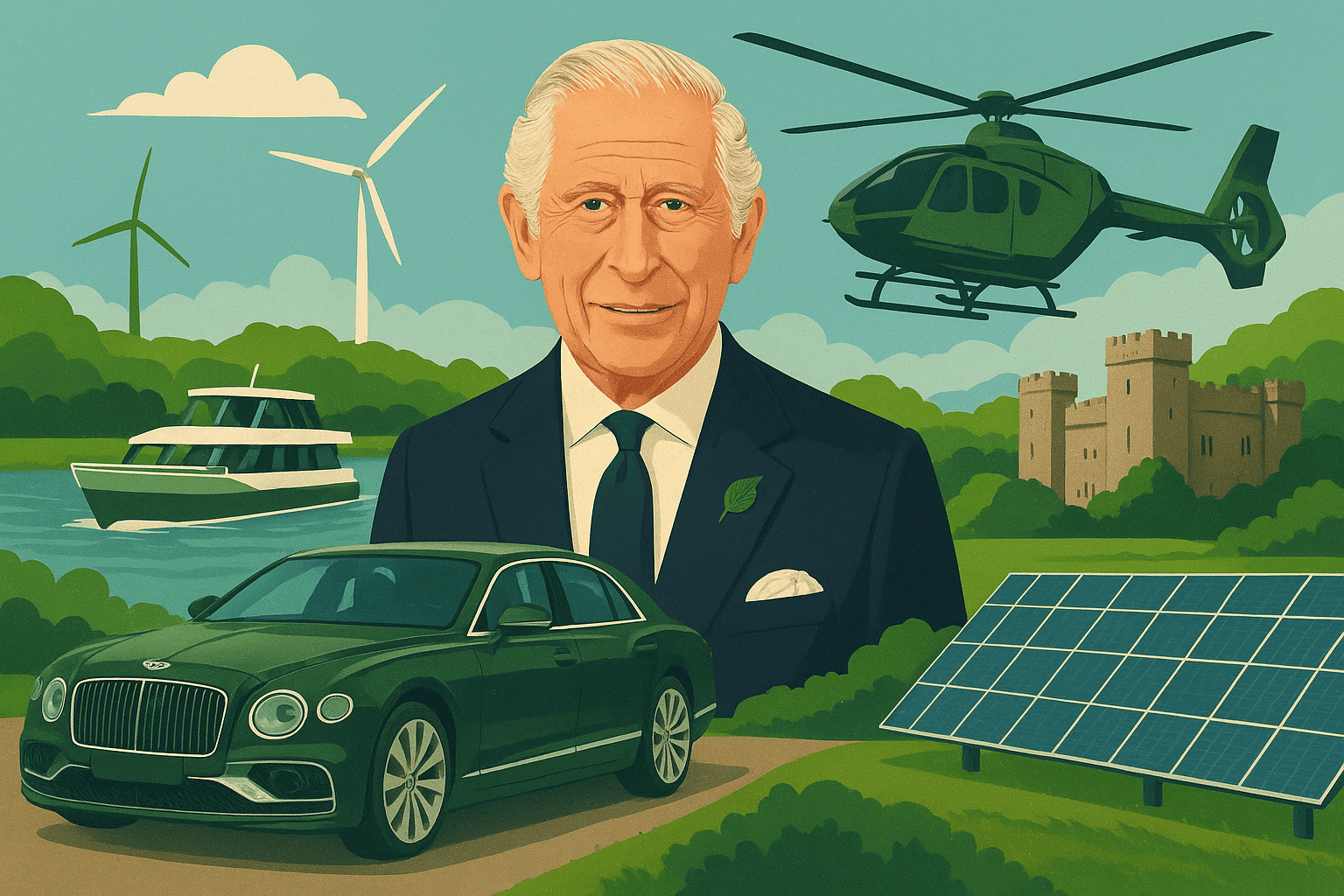
Long before his coronation, King Charles III built a lifelong reputation as an environmental advocate. As Prince of Wales, his concern for nature and sustainability shaped multiple initiatives that addressed climate change, deforestation, and responsible business practices.
Among these, the Sustainable Markets Initiative (SMI) stands out. Launched to engage the private sector, SMI encourages businesses to balance profitability with the planet’s needs aligning commerce with conservation. Another defining effort was the Prince’s Rainforests Project, founded in 2007 to combat deforestation and promote sustainable land use worldwide.
These initiatives demonstrated Charles’s commitment to environmental stewardship decades before he became king. So, when he ascended the throne in 2023, it was natural for his green principles to extend into the operations of the royal household particularly how the monarchy travels.
The Royal Fleet Goes Green
Biofuel Conversion of State Cars
One of King Charles’s most visible sustainable travel measures involves the royal vehicle fleet. In 2024, the King directed that the two state Bentley limousines used for ceremonial engagements be converted to run on biofuel.
This upgrade is a transitional measure, paving the way for a future shift toward fully electric state cars. The move represents a balance between tradition and innovation maintaining the grandeur of royal transport while cutting carbon emissions.
Helicopters and Sustainable Aviation Fuel
The royal family’s aerial travel is also undergoing transformation. According to The Guardian (July 2024), two 15-year-old helicopters are being replaced with AgustaWestland AW139 models, which can operate on up to 50% sustainable aviation fuel (SAF).
A temporary SAF storage facility has already been constructed at RAF Odiham, with a permanent fuel tank scheduled for completion by 2025 or 2026. These measures ensure that the royal household can access cleaner aviation fuel for both routine and ceremonial journeys.
Solar Power and Energy Efficiency on Royal Estates
Sustainability in the monarchy doesn’t stop with transportation. King Charles has extended his environmental efforts to royal properties across the United Kingdom.
-
Windsor Castle and other estates are being equipped with solar panels to generate renewable power.
-
At Buckingham Palace, traditional oil lanterns are being replaced with electric replicas, preserving royal aesthetics while reducing energy consumption.
-
On the Sandringham Estate, planning permission has been submitted for a 2,000-panel solar farm, covering around 2.3 hectares and capable of generating approximately 2.1 MW of clean energy enough to power the estate and feed surplus electricity back into the grid.
These measures demonstrate that sustainability within the royal household is not limited to travel but also embedded in the places the family calls home.
Symbolic Journeys and Environmental Diplomacy
King Charles often uses travel to send a message about sustainability. In one symbolic moment, he travelled along the River Thames via a hybrid Uber Boat to visit the Tideway Tunnel project, an initiative designed to modernize London’s sewage system and reduce river pollution.
Similarly, during his 2023 state visit to France, the King highlighted environmental cooperation by touring sustainable vineyards and planting a climate-resilient tree turning royal protocol into a statement of ecological unity.
These symbolic journeys reflect the King’s belief that leadership in sustainability isn’t only about reducing emissions but also about influencing cultural perception and setting public examples.
Reducing the Royal Carbon Footprint
Through these initiatives, King Charles aims to reduce the carbon footprint of royal operations not just for environmental reasons but also to lead by example.
According to the Sovereign Grant Annual Report (2024), the royal household’s fuel expenditure dropped from £1.4 million to £1.2 million year-over-year, suggesting early progress in efficiency. The report also noted around 400 fewer trips for official engagements compared to the previous period, reflecting an effort to minimize travel where possible.
Still, royal travel remains complex. Helicopter escorts, aircraft logistics, and security measures all contribute to emissions. Even biofuels and SAFs, though cleaner than traditional fuels, still have carbon costs depending on how they’re produced.
Balancing Symbolism and Substance
Some critics argue that royal sustainability efforts are more symbolic than substantial. However, King Charles’s consistent focus on environmental reform from corporate initiatives to household practices suggests a deeper intent.
The true test will be in the long-term transparency of emission reporting and the continued adoption of green technologies across the royal infrastructure. If sustained, these actions can demonstrate how even the most traditional institutions can evolve toward sustainability.
What It Means for Everyday Travellers
King Charles’s approach offers inspiration for anyone seeking to make their journeys greener. His efforts show that sustainable travel can be integrated into modern life without losing comfort or purpose.
Practical takeaways include:
-
Opt for electric or hybrid transportation. Like the royal fleet, shift from fossil fuel dependency where possible.
-
Support SAF initiatives. Choose airlines participating in sustainable aviation programs.
-
Stay in eco-certified accommodations. Select hotels powered by renewables or committed to reducing waste.
-
Make sustainability visible. Share your eco-friendly travel choices — awareness drives cultural change.
When even a centuries-old monarchy embraces sustainability, it reinforces the message that responsible travel is not a trend but a necessity.
Frequently Asked Questions (FAQs)
1. What are King Charles’s sustainable travel initiatives?
They include converting royal vehicles to biofuel, adopting sustainable aviation fuel for helicopters, installing solar panels on royal estates, and choosing eco-conscious travel methods during state visits.
2. Are these initiatives fully implemented?
Not yet. Most are being phased in such as helicopter replacement, SAF infrastructure, and ongoing renewable energy installations at royal properties.
3. Do these initiatives make a significant difference?
They reduce emissions within royal operations and set an influential example for sustainable leadership, though their direct global impact remains modest.
4. Can travellers apply similar principles?
Yes. Choosing eco-friendly transport, renewable-powered stays, and carbon-conscious flights all echo the King’s sustainability model.
5. Where can I learn more?
Visit the official Royal Family website under “The King and Sustainability” or explore updates through the Sustainable Markets Initiative and the Sovereign Grant Annual Report.
Conclusion
King Charles III’s sustainable travel vision reflects more than royal image management it embodies a commitment to integrating ecological awareness into every aspect of royal life. From biofuel Bentleys to solar estates and SAF-powered helicopters, his approach redefines what modern monarchy can represent in a climate-conscious era.
In an age when travel often clashes with environmental priorities, King Charles’s initiatives offer both a mirror and a challenge proving that even ceremonial journeys can evolve toward sustainability. If the Crown can commit to greener pathways, so too can the world’s travellers.