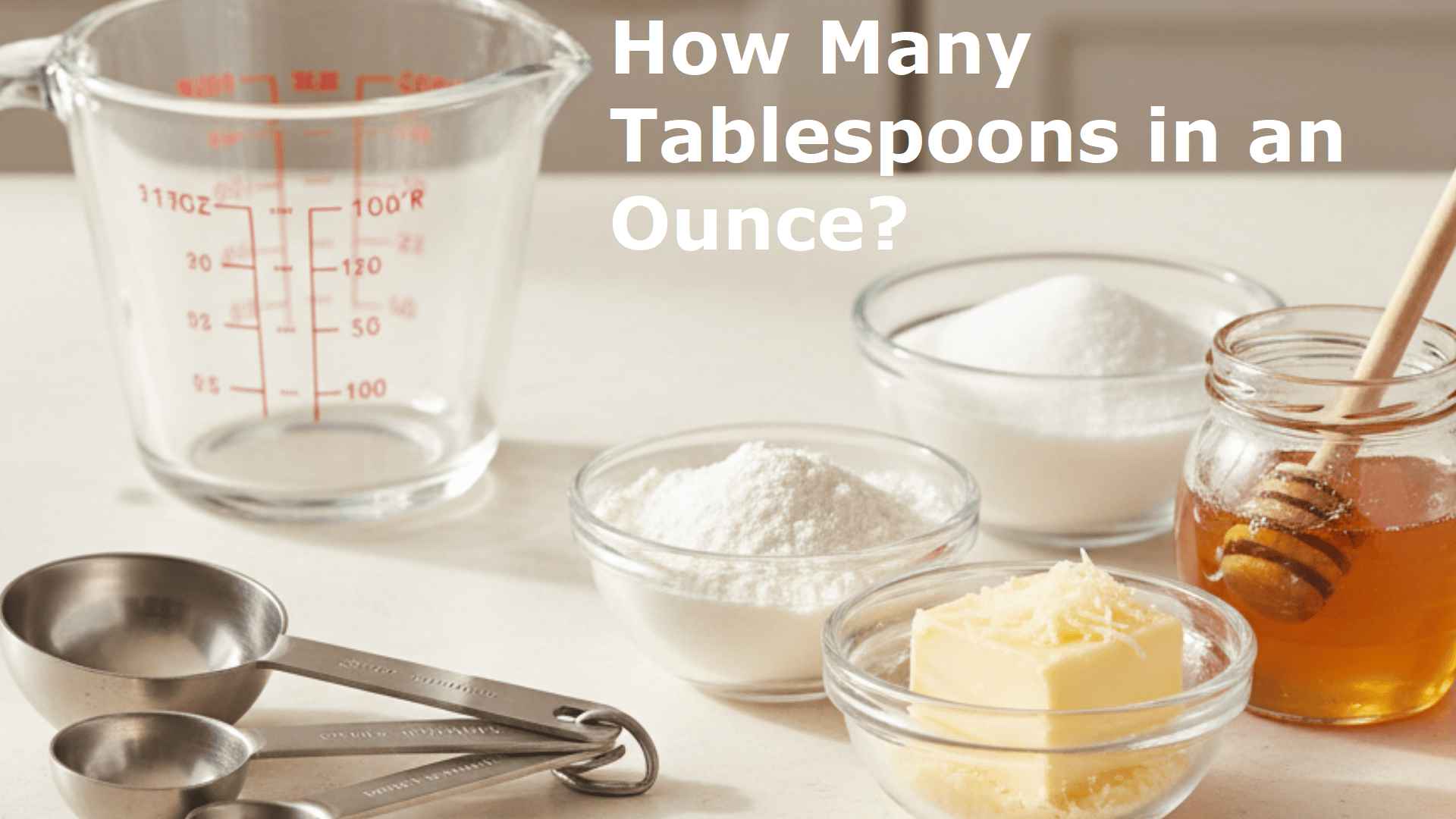
Understanding the conversion between ounces and tablespoons is essential for anyone who spends time in the kitchen. Whether you’re following a family recipe or experimenting with new dishes, accurate measurements can make the difference between a perfect outcome and a disappointing one. This guide answers common questions like “how many tablespoons in an ounce,” explores differences between liquid and dry ingredients, and provides practical tips for measuring success.
Basic Points of Ounce
Here are the key facts to remember when converting ounces to tablespoons:
- For liquid ingredients (such as water, oil, milk, or vinegar): 1 fluid ounce = 2 tablespoons.
- 2 tablespoons = 1 fluid ounce (yes, this is exact for liquids).
- 4 tablespoons do not equal 1 ounce — instead, 4 tablespoons = 2 fluid ounces.
- 1 tablespoon = 0.5 fluid ounces (for liquids).
- 2 teaspoons do not equal 1 ounce — 2 teaspoons = about 0.33 fluid ounces (since 1 fluid ounce = 6 teaspoons).
For dry ingredients, conversions vary by density:
- Flour: Approximately 3.5–4 tablespoons per ounce.
- Granulated sugar: Approximately 2–2.25 tablespoons per ounce.
- Salt (fine table salt): Approximately 1.5–2 tablespoons per ounce.
- Cocoa powder: Approximately 3–4 tablespoons per ounce.
- Butter or cream cheese: Approximately 2 tablespoons per ounce (similar to liquids due to density).
- Water or any thin liquid: Exactly 2 tablespoons per ounce.
- Powdered ingredients (like powdered sugar): Around 3–4 tablespoons per ounce, depending on sifting.
These points highlight why liquids follow a fixed rule while dry measurements require caution.
Why Accurate Conversions Matter in Cooking and Baking
Recipes often list ingredients in ounces, especially in American cookbooks, but many home cooks rely on tablespoon measures for convenience. Getting this wrong can alter textures, flavors, and even chemical reactions in baking. For instance, too much flour can make baked goods dense and dry, while excess liquid might cause a sauce to become watery.
Fluid ounces measure volume, which works perfectly for pourable items. Dry ounces, however, measure weight, and since volume depends on how densely an ingredient packs, the tablespoon count changes. This distinction explains why professional bakers prefer weighing ingredients on a scale for precision.
Consider a real-world scenario: You’re preparing a vinaigrette dressing that requires 3 fluid ounces of olive oil. With the standard liquid conversion, that’s exactly 6 tablespoons — easy to scoop and mix without needing a separate measuring cup.
Liquid Ingredients: The Straightforward Conversion
When dealing with liquids, the rules are consistent across water, oils, milk, broths, juices, and extracts. In the US customary system:
- 1 fluid ounce equals precisely 2 tablespoons.
- This means 2 fluid ounces = 4 tablespoons.
- 4 fluid ounces = 8 tablespoons (or half a cup).
- 8 fluid ounces = 16 tablespoons (or one full cup).
Specific examples include:
- How many tablespoons in an ounce of water? Exactly 2.
- For cream or syrups that pour easily, the same 2 tablespoons per ounce applies.
This reliability comes from both units measuring volume. One tablespoon holds about 14.8 milliliters, and one fluid ounce is roughly 29.6 milliliters a perfect 1:2 ratio.
Answering direct questions:
- Does 2 tablespoons equal 1 oz? Yes, for any liquid.
- Does 4 tablespoons equal 1 ounce? No — that’s 2 ounces.
- How many ounces are in 1 tablespoon? 0.5 fluid ounces.
For smaller units: 1 fluid ounce = 6 teaspoons, so 2 teaspoons fall short of 1 ounce.
Dry Ingredients: Why Conversions Vary and How to Handle Them
Dry measurements introduce variability because weight-to-volume ratios differ. A tablespoon of light, airy flour occupies more space than the same tablespoon of dense sugar.
Common approximations based on standard densities:
- All-purpose flour: 1 ounce ≈ 3.5–4 tablespoons (spooned and leveled).
- Granulated sugar: 1 ounce ≈ 2–2.25 tablespoons.
- Fine table salt: 1 ounce ≈ 1.5–1.8 tablespoons.
- Unsweetened cocoa powder: 1 ounce ≈ 3–3.5 tablespoons.
- Butter (softened or melted): 1 ounce = 2 tablespoons (behaves like a semi-liquid).
- Cream cheese (softened): 1 ounce ≈ 2 tablespoons.
- Powdered sugar: 1 ounce ≈ 3.5–4 tablespoons (unsifted).
For instance, if a recipe calls for 4 ounces of flour, that’s roughly 14–16 tablespoons. Always spoon dry ingredients lightly into the tablespoon and level off the top to avoid packing, which can add extra weight.
How many tablespoons in an ounce of sugar? About 2.25 for granulated. For salt, closer to 1.7. These figures come from average densities used in reliable cooking references.
To achieve consistency, invest in a digital kitchen scale. Weighing eliminates guesswork, especially for baking where precision affects rise and texture.

Practical Tips for Measuring in the Kitchen
To measure liquids accurately:
- Use clear measuring cups with spout lines at eye level.
- Pour slowly to avoid bubbles or overflow.
For dry items:
- Fluff the ingredient first, spoon into the measure, and sweep excess with a straight edge.
- Avoid scooping directly from the container, as it compacts the material.
Common pitfalls:
- Confusing fluid ounces with weight ounces on packaging.
- Using heaped tablespoons instead of level ones.
- Forgetting international differences — US tablespoons are slightly smaller than Australian ones.
Scaling recipes? Double ounces mean double tablespoons for liquids, but recalculate carefully for dry.
Additional Related Conversions
Beyond tablespoons:
- 1 fluid ounce = 6 teaspoons.
- 1 cup = 8 fluid ounces = 16 tablespoons.
- For ounces in tablespoons reversed: 2 tablespoons = 1 fluid ounce (liquid) or varies for dry.
These tools help adapt recipes on the fly.
Final Thoughts: Master Measurements for Better Results
Knowing how many tablespoons are in an ounce empowers confident cooking. Stick to 2 tablespoons per fluid ounce for liquids, and use ingredient-specific guides or a scale for dry items. With practice, these conversions become second nature, leading to consistently delicious meals and bakes.
Next time a recipe throws ounces at you, reach for your tablespoons with assurance.