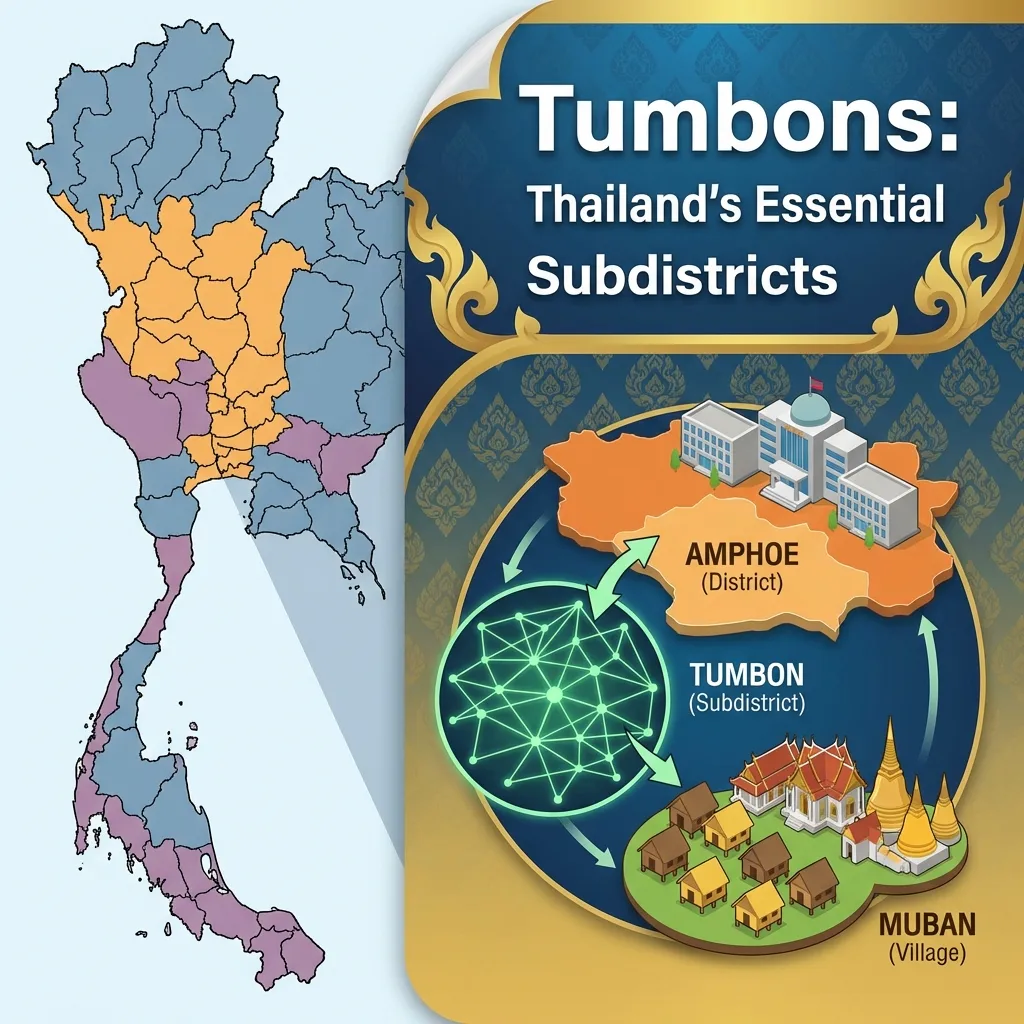
Thailand’s administrative landscape is a fascinating blend of tradition and modernity, where local units play a pivotal role in connecting national policies to grassroots realities. At the core of this system are tumbons, often referred to as subdistricts, which serve as vital links between larger districts and smaller villages. These entities are more than just bureaucratic divisions; they embody community spirit, drive economic growth, and preserve cultural heritage in a country where rural life remains deeply influential. For anyone interested in understanding how Thailand maintains balance between centralized control and local autonomy, delving into the world of tumbons offers profound insights.
What Exactly Is a Tumbon?
In the Thai administrative hierarchy, a tumbon (ตำบล) functions as a subdivision within a district, or amphoe. It typically encompasses several villages, known as muban, and acts as a hub for localized management and service provision. While the English term “subdistrict” captures its essence, the word “tumbon” evokes deeper connotations tied to historical communities, shared resources, and enduring social bonds. This makes tumbons indispensable for millions, especially in rural and semi-urban settings, where they represent the most immediate layer of government interaction.
The Historical Roots of Tumbons
The origins of tumbons trace back to ancient Thai settlement patterns, predating formal governance structures. Communities historically formed around common agricultural fields, water bodies, and religious sites like temples, naturally evolving into these cohesive units. In the late 1800s and early 1900s, during sweeping administrative reforms aimed at enhancing control and revenue systems, tumbons were formalized as intermediaries between districts and villages. Over decades, their functions grew from mere oversight to encompass strategic planning and community-driven initiatives, reflecting Thailand’s adaptive governance evolution.
How Tumbons Are Structured Administratively
A typical tumbon consists of 5 to 15 villages, varying based on demographic and geographic factors. While villages have their own leaders, the tumbon oversees coordination for wider projects. Governance is handled through entities like the Subdistrict Administrative Organization (SAO) or subdistrict municipalities, which manage finances, infrastructure, and essential services. This setup ensures efficient resource allocation tailored to local needs.
Key Functions of Local Governance in Tumbons
Tumbons empower communities by decentralizing power, with elected officials advocating for residents’ priorities in collaboration with higher authorities. Their core duties include upkeep of roads and drainage, basic healthcare and hygiene support, waste management and eco-protection, as well as fostering education and cultural activities. This approach guarantees that initiatives resonate with actual community requirements, promoting inclusive growth over imposed mandates.
Tumbons as Pillars of Community Identity
Far beyond paperwork, tumbons foster a sense of belonging. Locals often tie their identity to their tumbon, cherishing distinct festivals, dialects, and traditions that differ even within the same district. Central gathering spots like temples, markets, and schools strengthen social ties, encouraging collaboration and mutual support integral to Thai communal life.
Tumbons Summary
To highlight the significance of tumbons in Thailand’s framework, here are the key aspects drawn from their multifaceted roles:
- Administrative Role: Serve as subdistricts linking districts and villages for efficient governance and service delivery.
- Historical Significance: Evolved from traditional community clusters to formalized units during 19th-20th century reforms.
- Governance Structure: Managed by SAOs or municipalities handling budgets, infrastructure, and public services.
- Community Identity: Symbolize local heritage with unique traditions, festivals, and social hubs like temples and markets.
- Economic Contributions: Support agriculture through irrigation and cooperatives, plus OTOP programs for local products.
- Tourism and Development: Promote community-based tourism via homestays and eco-activities for sustainable income.
- Social Services: Oversee education, welfare for vulnerable groups, and health initiatives with local volunteers.
- Environmental Efforts: Manage waste, protect resources, and build resilience against natural challenges.
- Challenges: Face budget constraints, urban migration, and balancing modernity with tradition.
- Future Outlook: Emphasize decentralization, digital tools, and participation for enduring vitality.
This overview underscores how tumbons integrate various elements to sustain Thai society.
The Economic Backbone Provided by Tumbons
In Thailand’s countryside, tumbons are economic engines, primarily through farming like rice, fruits, and animal husbandry. Local bodies aid farmers with infrastructure like irrigation and skill-building programs. Initiatives such as One Tumbon One Product (OTOP) boost entrepreneurship by highlighting unique goods like crafts and foods, enabling access to broader markets and enhancing rural livelihoods.
Boosting Tourism Through Tumbons
Many tumbons leverage their scenic beauty, customs, and landmarks to draw tourists, fostering sustainable development. Community-led experiences, including homestays, culinary workshops, and nature tours, distribute earnings equitably while preserving authenticity. This not only generates revenue but also instills pride in local heritage.
Education and Welfare Services in Tumbons
Tumbons facilitate access to early education and primary schools, partnering with national bodies to bridge gaps in remote areas. They also administer aid for seniors, disabled individuals, and low-income families, offering timely, customized support due to their proximity to residents.
Ensuring Public Health and Safety
Health promotion in tumbons involves volunteers and clinics focusing on prevention, cleanliness, and nutrition. In crises like floods or pandemics, tumbon teams lead responses, utilizing local knowledge for swift, effective aid distribution.
Tumbons’ Approach to Environmental Stewardship
Sustainability is prioritized in tumbons, with programs for waste handling, water conservation, and eco-friendly practices. Community campaigns on recycling and reforestation, alongside strategies for climate vulnerabilities, demonstrate proactive environmental management.
Obstacles and Opportunities for Tumbons
Tumbons grapple with funding shortages, especially in isolated spots, and demographic shifts from rural-to-urban migration. Preserving culture amid progress poses another hurdle. Yet, these challenges spur innovation, with potential for enhanced resources and adaptive strategies.
Looking Ahead: The Evolving Role of Tumbons
As Thailand advances, tumbons will thrive through greater empowerment, tech integration for transparency, and active citizen involvement. By nurturing leadership and sustainability, they can sustain their relevance, blending tradition with contemporary demands.
In essence, tumbons transcend maps and mandates—they are vibrant hubs reflecting Thailand’s soul. Their contributions to governance, economy, and culture ensure they remain foundational to the nation’s progress, offering lessons in harmonious local-national synergy.