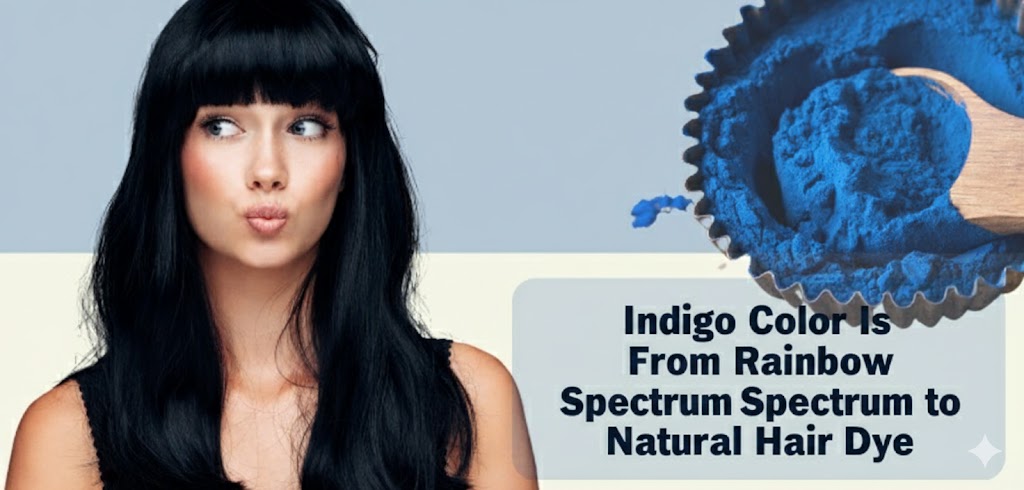
Indigo captivates with its profound depth, blending mystery and elegance in a single hue. This versatile color bridges blue and violet, appearing in nature, art, and beauty routines. Explore its visual appeal, scientific roots, and growing popularity in natural hair care.
What Does Indigo Color Look Like?
Indigo manifests as a rich, dark shade between deep blue and subtle violet. It can appear nearly black in dim light but reveals cool blue undertones under brighter conditions. This muted intensity distinguishes it from vibrant blues or bold purples, offering sophistication and calm.
Designers and artists favor indigo for its adaptability in fashion, interiors, and branding.
Which Two Colors Combine to Create Indigo?
Artists primarily mix blue and violet to produce indigo. In traditional subtractive mixing with paints or dyes, a strong blue base with added purple yields the desired depth. For warmer tones, incorporate a hint of red.
In digital additive color models, blue and magenta approximate indigo effectively. Experimentation allows customization—cooler versions emphasize blue, while adjustments create nuanced variations suitable for creative projects.
Why Is Indigo Included in the Rainbow?
Sir Isaac Newton established indigo’s place in the rainbow during his 17th-century prism experiments. He divided the visible spectrum into seven colors: red, orange, yellow, green, blue, indigo, and violet (ROYGBIV). Newton selected seven to mirror musical scales and symbolic traditions.
Indigo marks the transition between blue and violet, corresponding to wavelengths around 445 nanometers. Though the spectrum flows continuously, this distinction aids in teaching color perception and optics.
This historical choice underscores indigo’s role in understanding light and human vision.
What Is Indigo Color Made From?
Natural indigo originates from the leaves of the Indigofera tinctoria plant, cultivated in tropical areas like India and Africa. Harvesting and fermenting the leaves releases indican, which oxidizes into indigotin—the iconic blue pigment.
Modern synthetic versions use chemical processes, but plant-derived indigo remains preferred for its sustainability and authenticity in traditional dyeing.
Indigo in Natural Hair Coloration: A Gentle Alternative
Indigo powder from Indigofera tinctoria provides a popular natural method for hair dyeing. This plant-based approach delivers deep, cool-toned results without synthetic chemicals, appealing to those seeking eco-friendly options.
Products often blend indigo with herbs like amla for added nourishment. Application involves mixing powder into a paste, applying to hair, and allowing oxidation for lasting color.

Many users achieve raven black or blue-black shades, with indigo effectively covering grays in one or two steps.
Key Highlights of Indigo and Its Applications
- Visual Characteristics — Deep blue-violet hue with calming, sophisticated appeal.
- Mixing Basics — Primarily blue + violet; adaptable for custom shades.
- Rainbow Role — Newton’s seven-color spectrum for symbolic and educational purposes.
- Natural Source — Derived from Indigofera tinctoria leaves through oxidation.
- Hair Benefits — Conditions while coloring; popular in vegan, organic products.
- Product Examples — Pure indigo powders for intense black-blue tones, often with high ratings.
- Usage Tips — Mix with water or herbs; two-step process with henna for best results.
Before and After: Real Results with Indigo Hair Dye
Natural indigo transforms hair dramatically, turning grays or lighter shades into rich dark tones with subtle blue reflections.

Repeated applications build intensity, and the plant extracts often improve hair strength and shine.
Benefits and Considerations for Using Indigo on Hair
Indigo offers numerous advantages over chemical dyes:
- Avoids irritants like ammonia.
- Provides antioxidants that support scalp health.
- Delivers semi-permanent color that fades gracefully.
Pair it with henna first for brown bases to prevent overly green initial tones on light hair. Pure indigo suits darker hair for deepening and gloss.
As demand for clean beauty rises, indigo’s natural profile makes it a staple in sustainable routines.
The Timeless Appeal of Indigo
From ancient textiles to modern hair care, indigo endures as a symbol of depth and innovation. Its plant origins connect us to traditional practices, while contemporary uses highlight health and environmental benefits. Whether appreciating its spectrum position or applying it for vibrant locks, indigo invites exploration of color’s natural wonders.
Conclusion: The Enduring Magic of Indigo
Indigo stands as a remarkable bridge between science, history, nature, and modern beauty. From its deliberate placement in Newton’s seven-color rainbow spectrum to its ancient origins in the leaves of the Indigofera tinctoria plant, this deep blue-violet hue carries layers of meaning and utility that few colors can match.
In art and design, indigo offers timeless depth and calm sophistication. In optics, it reminds us how human perception and cultural symbolism shape the way we categorize the continuous flow of light. Most vibrantly today, in the world of natural hair care, indigo empowers people to achieve rich, glossy dark tones ranging from intense black to cool blue-black—without exposing their hair or scalp to harsh chemicals.