If you’ve ever raised animals or even just been curious about veterinary medicine, you might have heard the name Levasole tossed around. It sounds a bit like a sci-fi gadget, doesn’t it? But in reality, Levasole is a medicine that’s been around for decades and it plays a pretty important role in keeping livestock healthy.
In this article we’ll walk through what Levasole is, how it works, what it’s used for and why you should care about it. Don’t worry—we’ll keep the explanations simple so whether you’re a farmer, a vet student or just a curious reader, you’ll walk away knowing exactly what this drug does.
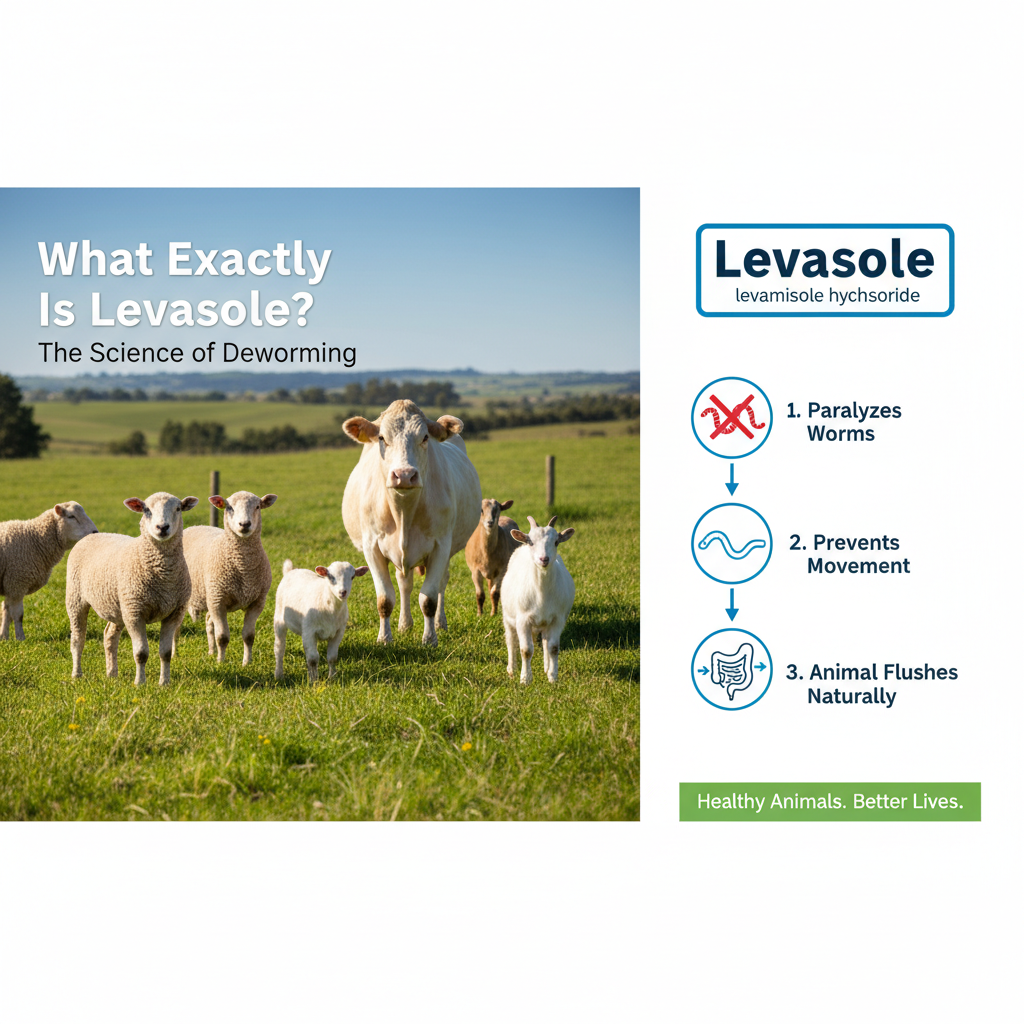
What Exactly Is Levasole?
Levasole is basically the brand name for levamisole hydrochloride, a powerful anthelmintic (that’s the science-y word for a dewormer). Instead of targeting bacteria or viruses, it goes after parasitic worms—the kind that make animals sick by living in their digestive or respiratory tracts.
In plain English:
-
Levasole helps kick out unwanted worms from animals like sheep, cattle, goats, pigs and even poultry.
-
It’s been widely used in veterinary medicine because worms can seriously hurt livestock growth, milk production and overall health.
-
The drug doesn’t just “chase” worms—it paralyzes them. Once they can’t move, the animal’s body naturally flushes them out.
How Does Levasole Work?
Imagine you’re pulling weeds in your garden. Instead of just cutting off the tops, you want to deal with the roots so they don’t grow back. Levasole works in a similar way—by targeting the worms’ nervous system.
Here’s what happens:
-
The drug enters the animal’s bloodstream.
-
It locks onto the worms’ nerve receptors.
-
This causes paralysis (worms can’t move or “hold on”).
-
The animal expels them through natural processes.
It’s fast, effective and leaves the animal stronger because it no longer has to “share” nutrients with freeloading parasites.
Where Is Levasole Used?
You’ll mostly find Levasole in livestock management. Farmers and veterinarians rely on it for:
-
Cattle and sheep: To control stomach worms and lungworms.
-
Goats: To reduce losses in milk production caused by parasites.
-
Pigs: To clear out roundworms that can slow down growth.
-
Poultry: For controlling certain intestinal parasites.
It’s available in several forms:
-
Injectable solutions
-
Oral drenches (liquid given by mouth)
-
Boluses (big tablets for cattle)
-
Soluble powders for mixing in water
Why Is Levasole Important for Farmers?
Think of parasites like invisible thieves. They steal nutrients, cause weakness and open the door for other diseases. For farmers this translates into:
-
Slower growth in young animals
-
Lower milk or meat yields
-
More veterinary bills
-
In extreme cases, even animal deaths
By using Levasole responsibly, farmers protect their animals’ health and ensure their farm stays productive. It’s not just about economics—it’s about animal welfare too.
Safety and Precautions
Okay, so before you rush out and stock up on Levasole, there are a few important things to know.
-
Withdrawal times matter: Animals treated with Levasole need a certain “waiting period” before their meat or milk can be safely consumed. This prevents drug residues from ending up on your plate.
-
Not for weak or stressed animals: Giving it to animals that are already very sick or stressed could make things worse.
-
Dosage is critical: Too little won’t work; too much can be toxic. Always follow the vet’s recommendation.
-
Pregnancy caution: Some guidelines suggest avoiding Levasole in pregnant animals unless a vet specifically approves it.
Fun Fact: Did You Know?
Levasole’s active ingredient, levamisole, was once even used in humans—not for worms but as an immune booster in certain cancer treatments. However, due to side effects, it’s no longer common in human medicine. Today it mostly lives on in the veterinary world.
Alternatives and Resistance
Here’s something important: parasites are sneaky. Over time they can become resistant to drugs like Levasole if farmers overuse them. That’s why vets often rotate between different types of dewormers or recommend testing animals first before treatment.
Some alternatives include:
-
Ivermectin
-
Albendazole
-
Fenbendazole
Using these in a smart rotation helps keep parasites “guessing” and reduces the risk of resistance.
The Bottom Line
Levasole may not be a household name but in the world of farming and veterinary medicine, it’s a game-changer. By targeting harmful worms, it helps animals grow stronger, stay healthier and live more productive lives.
If you’re raising livestock, always consult with a vet before using it—because while Levasole is powerful, it’s not a one-size-fits-all solution. Used wisely, though, it can protect both your animals and your livelihood.
So the next time you hear “Levasole,” you’ll know it’s not just another complicated drug name—it’s a trusted tool in the ongoing battle against parasites.